

Principles of Spatial Design
Core Principles of Recording Studio Acoustic Design
Even the best materials must follow spatial design logic. Below are the universal golden principles for studio acoustic construction.
Core Principles of Recording Studio Acoustic Design
Even the best materials must follow spatial design logic. Below are the universal golden principles for studio acoustic construction.
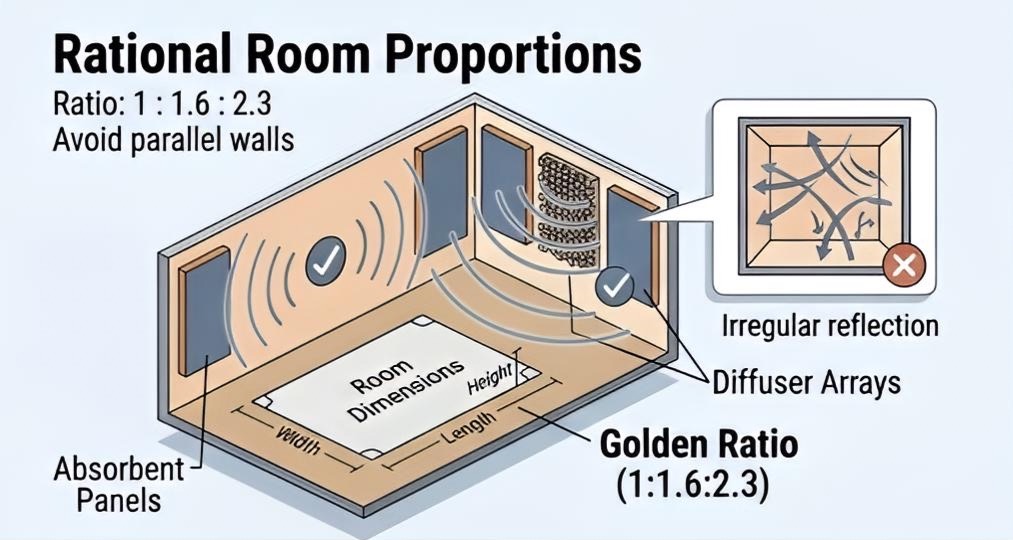
Prioritize spaces close to the golden ratio (1:1.6:2.3). Avoid square or overly narrow rooms to reduce standing waves and sound focusing. Irregular spaces require targeted material optimization.
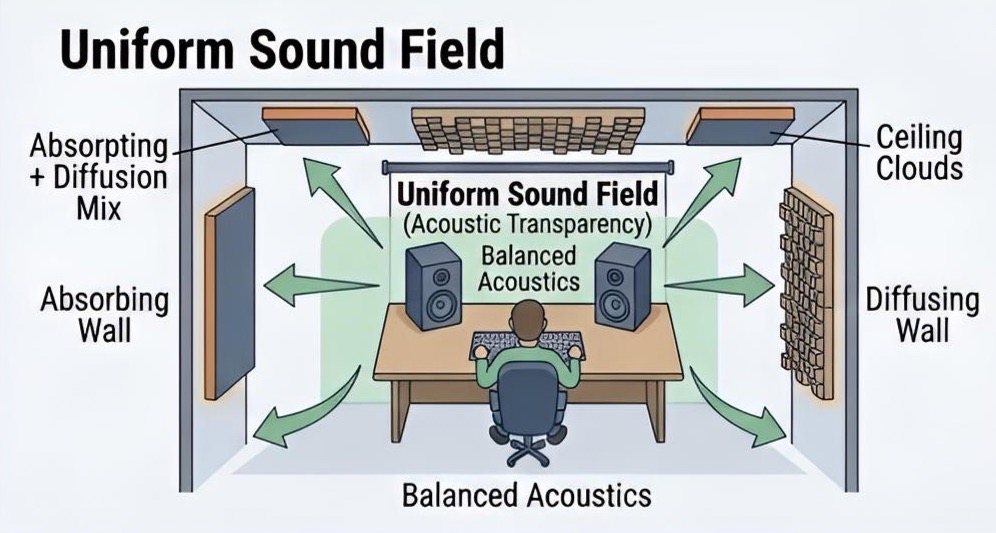
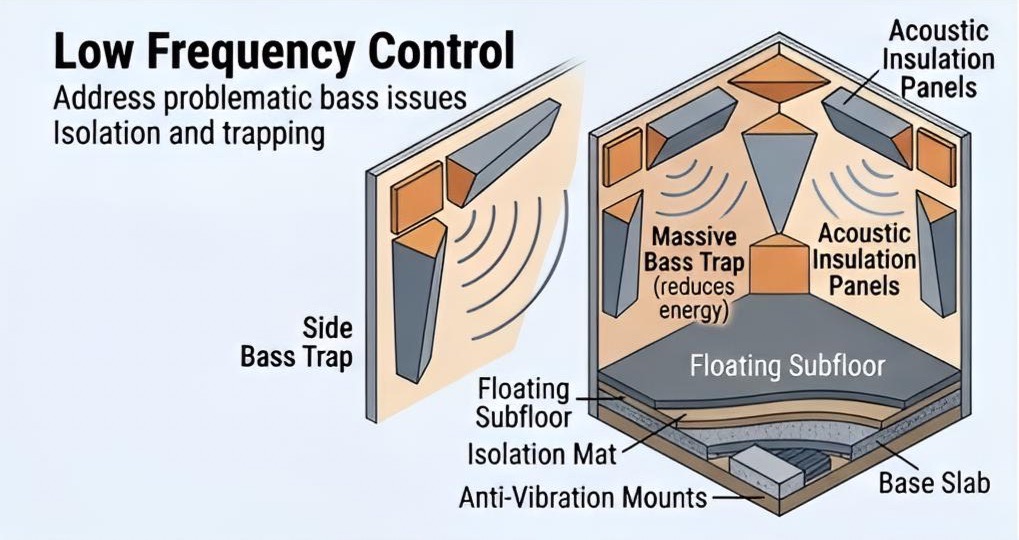
Low frequencies are the most difficult to handle and most critical to sound quality, so they must be addressed first:
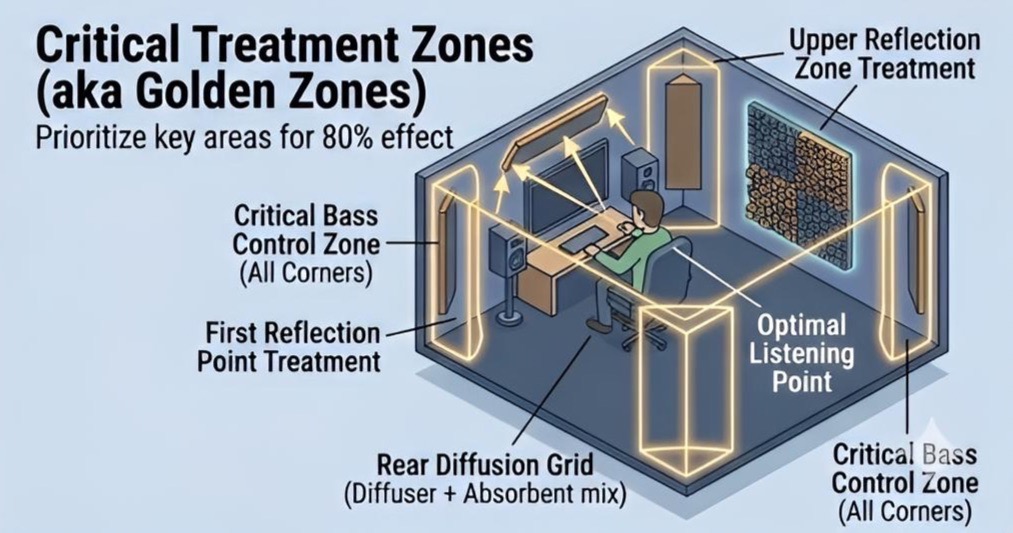
80% of studio acoustic performance comes from key areas:
3618 4466
9378 2061